 Plan a journey
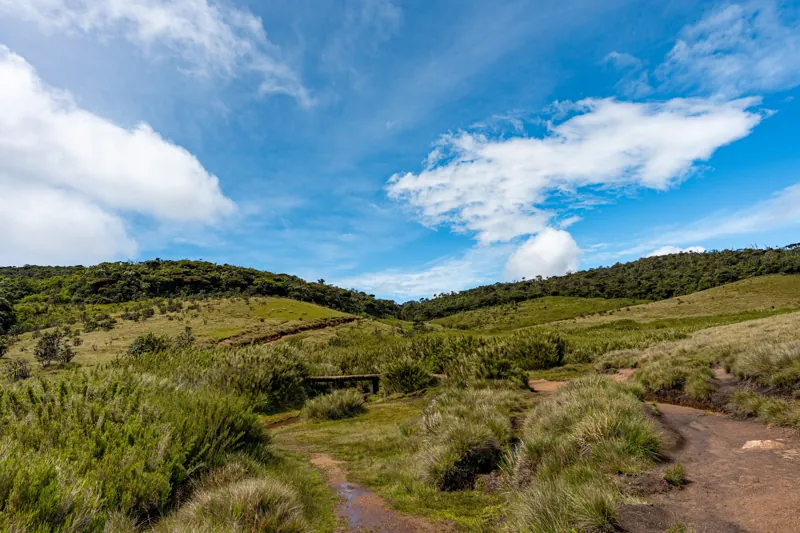
Horton Plains is a wild, windswept plateau of grassland and cloud forest at over 2,000 metres. A dawn walk leads to World's End, where the land falls away without warning, and to the silvery curtain of Baker's Falls.
History
The plains are named after Sir Robert Wilmot-Horton, a British governor of Ceylon in the 1830s. Long before that, they were known to locals as Maha Eliya, the 'great open plain'. The area became a nature reserve in 1969 and a national park in 1988.
In 2010, UNESCO listed it as part of the Central Highlands of Sri Lanka World Heritage Site, together with the Knuckles Range and the Peak Wilderness, because of the extraordinary number of species found nowhere else.
Culture & meaning
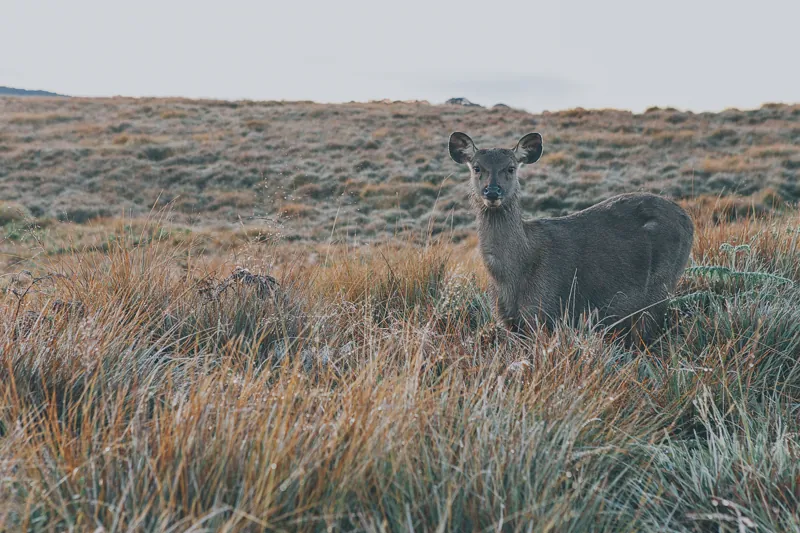
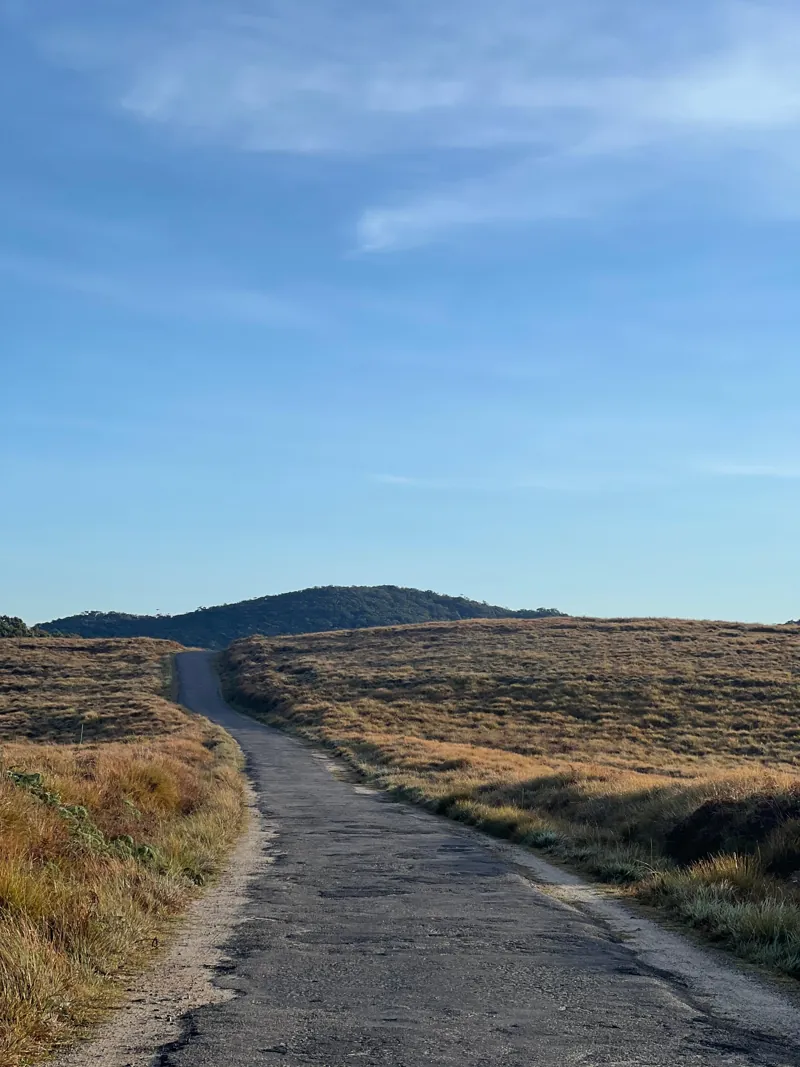
The plateau feeds several of the island's major rivers, including the Mahaweli, and its montane forests are home to sambar deer, endemic birds and rare orchids. Visitors walk a 9 km loop past World's End, where the escarpment plunges about 870 metres. On a clear morning you can see all the way to the southern coast.
The park takes conservation seriously. Bags are checked for plastic at the gate, and visitors must keep to the trail.
Travel notes
- Arrive when the gate opens (around 6am) for the best chance of a clear view at World's End.
- Bring warm layers and rain gear, and wear proper walking shoes. The loop takes 3–4 hours.
- Single-use plastic is banned and bags are checked, so carry a reusable bottle.
- Most visitors stay in Nuwara Eliya (about 1 hour away) or around Haputale and Ohiya.